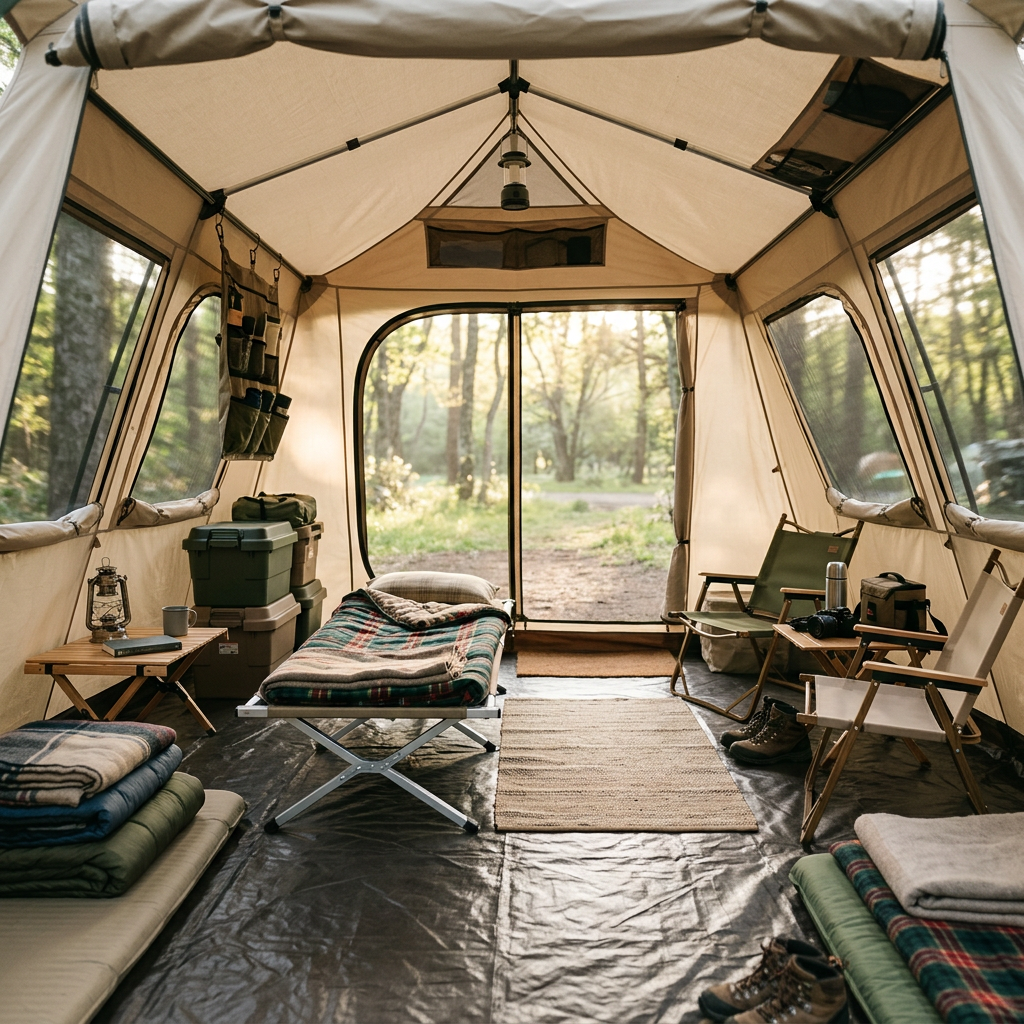
What Actually Fits in a Tent? A Size Guide for Comfortable Camping
Here’s a practical, size-by-size breakdown of what you can comfortably fit in different tent categories — from a minimalist backpacking tent to a full glamping-style cabin tent — so you can plan your setup before you ever leave the driveway.
Small Backpacking Tents (1-2 Person, ~7′ x 5′)
These tents are built for weight savings, not living space. Floor space is typically just enough for:
- One or two sleeping pads or an ultralight sleeping bag
- A small dry bag or backpack at your feet or head
- A headlamp hung from the ceiling loop
What doesn’t fit: cots, chairs, tables, or standing room. Backpacking tents are sleep-only shelters — everything else (cooking, sitting, gear storage) happens outside under a rain fly or tarp.
Mid-Size Family Tents (4-6 Person, roughly 10′ x 9′)
This is the sweet spot for most weekend campers. You’ll have enough floor space for:
- Two to three sleeping pads or one queen-size airbed
- A small camp cot for a kid or pet
- A compact gear tote or duffel in a corner
- A battery lantern hung from the ceiling
Tight but doable: a single low camp chair if you’re willing to sacrifice some sleeping space. Most people in this size tent keep the “living room” elements (chairs, table, cooking setup) outside near the tent, not inside it.
Larger Family & Multi-Room Tents (8-10 Person, roughly 14′ x 10′)
Once you’re in this range, you start getting real flexibility. Many of these tents include a room divider, which opens up options like:
- Two queen airbeds or three cots
- A small side table between beds
- A gear organizer or folding shelf unit in the “extra” room
- Room to stand and change clothes comfortably
This size works well for families who want separate sleeping zones for kids and adults, or for campers who want one gear-storage room instead of piling everything in a truck bed.
Cabin Tents (Roughly 189″L x 142″W x 91″H)
This is where comfortable camping really shines. A cabin tent this size — about 15’9″ x 11’10”, with nearly 7’7″ of headroom — is essentially a small room you can stand up and move around in. Here’s what realistically fits:
- A cot with a rug or foam mat underneath for a proper bed setup that doesn’t feel like sleeping on the ground
- A cozy reading corner — a compact chair, a small side table, and a battery lantern for evening downtime
- A mini seating area — two folding chairs or a loveseat facing a low table, enough for morning coffee or a card game without leaving the tent
- An entry shoe bin right by the door to keep dirt off your rug
- A folding shelf unit along one wall for bins, snacks, and gear — no more digging through duffel bags
- Overhead string lights along the ceiling ridge for ambient lighting at night
With this much square footage, the key is zoning: keep a clear walking path between the sleep area, seating area, and storage so it feels like a room, not a storage unit.
Quick Tips for Planning Your Tent Layout
- Measure your gear before you pack it. Cots, chairs, and tables all have listed dimensions — lay them out on your driveway with tape marking your tent’s footprint to see what actually fits.
- Leave a walking path. A tent packed wall-to-wall with furniture feels cramped even if everything technically fits. Aim to use no more than 60-70% of your floor space for furniture.
- Use vertical space. Folding shelves, hanging organizers, and ceiling hooks free up floor space fast, especially in cabin tents with tall walls.
- Zone by function. Sleeping, lounging, and storage areas feel more comfortable — and more organized — when they’re visually separated, even just with a rug or mat marking the “living room” zone.
- Keep the entrance clear. A shoe bin or small mat by the door keeps dirt contained and makes the rest of the tent feel cleaner.
- Do a dry run. If you have new gear: Set it all up in the backyard before your adventure! Even better, spend the night in the yard to see how everything functions. One wonderful aspect of shopping at Amazon or Walmart is their return policy; you can try items at home and easily exchange them for the perfect size before your trip. Enjoy the process of getting ready for your journey!
Whether you’re squeezing a sleeping pad into a backpacking tent or setting up a full glamping-style cabin tent with a reading nook and string lights, matching your gear to your tent’s actual dimensions is the difference between a cramped night and a genuinely comfortable one. Plan it out, and being outside doesn’t have to mean giving up your comforts.
Thank you for stopping by-
Campfire Courtney
