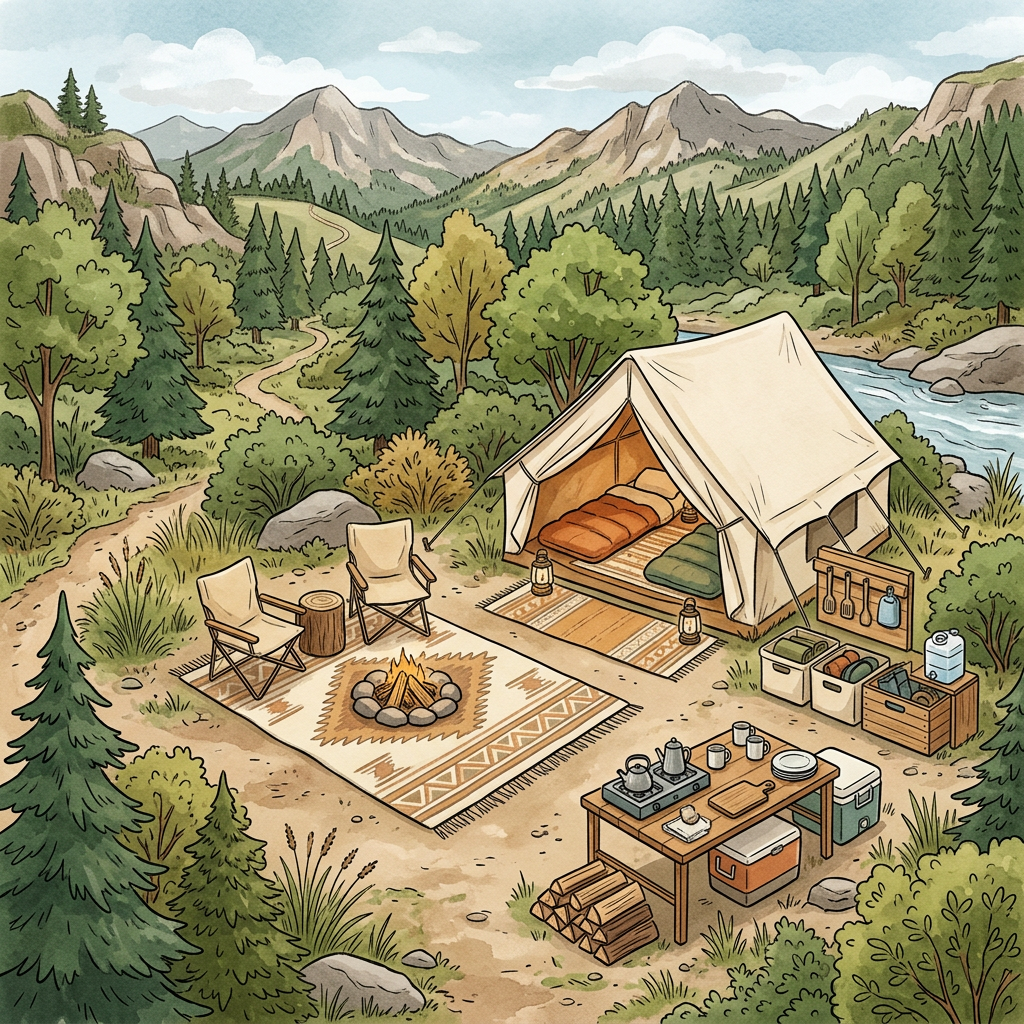
Love it, don’t rough it. Camp comfy, travel more, spend less.
A cabin tent turns a cheap campsite into a roomy, comfy home base, so you can travel more often, explore more places, and still sleep like a person who has her life together.
Let’s get one thing straight: budget travel does not have to mean shivering in a ditch while you “build character.” Hotels, flights and restaurant meals drain your bank account faster than a bad dog gets into the trash. A campsite costs a fraction of that, and a cabin tent makes it feel like a tiny cabin instead of a survival challenge nobody asked for.
Here’s the game plan: what makes cabin tents so cozy, where to find cheap campsites (with real prices, because “affordable” without a number helps nobody), how to explore without lighting your money on fire, and how to set up camp so you actually sleep. Love it, don’t rough it!
What Is a Cabin Tent, Anyway?
A cabin tent has nearly straight walls and a tall ceiling, so it’s shaped like a little room instead of a sad dome you army-crawl into. Same floor size, way more usable space.
Here’s what that means for your comfort:
- Room to stand up. Many cabin tents have center heights of six feet or more. Changing clothes without doing yoga? Revolutionary.
- Space for real furniture. Cots, an air mattress, a small table and a camp chair all fit. Yes, a chair. Inside your tent. Living the dream.
- Divider walls. Some models have a curtain that splits the tent into two rooms, perfect for kids, snorers, or that one person who “just needs space.”
- Big windows and doors. Mesh windows bring in breezes and views, and big doors make it easy to haul in your 47 bins or at least the 9 bins.
- Easy setup. Most use simple pole systems that two people can pitch in 15 to 20 minutes, with minimal arguing (results may vary).
The catch: cabin tents are heavier and bulkier than backpacking tents, and those tall walls catch wind like a sail. They’re made for car camping, where you drive up, unload and settle in. That’s perfect for budget travel, because you can haul your comforts from home instead of paying a hotel to rent you a pillow.
Why Cabin Tent Camping Is Budget Travel Gold
Lodging is usually the biggest travel expense, and camping shrinks it to a small nightly fee. A cabin tent makes that cheaper option feel like a treat instead of a punishment.
- You pay once. After the tent and a few comfort items, each trip costs just the campsite, gas and food. Your tent does not charge a resort fee.
- You control your food costs. Cooking at camp and packing a cooler beats three restaurant meals a day, and nobody judges you for eating hot dogs twice.
- You can stay longer. A few nights of camping often cost about the same as a single hotel night. Do the math, then do a little dance.
- It’s flexible. Short weekend, long road trip or a stop along the way, a tent goes wherever the car goes. No check-in desk, no “your room isn’t ready yet.”
- It’s comfortable enough to repeat. If you sleep well, you’ll want to go again, and that’s how budget travel becomes a habit instead of a one-time horror story.
Where to Camp for Less
The best budget campsites are often the ones nobody brags about online. Prices swing wildly by state and season, so check the current rate before you go.
- State parks. Usually affordable, with real restrooms, showers and great trails. Many offer lower rates on weekdays.
- County and city parks. Often the cheapest developed campsites, and many are practically in your backyard.
- National forest campgrounds. Simple sites with fewer amenities and lower fees, in places that look photoshopped.
- Dispersed camping. On many national forest and Bureau of Land Management (BLM) lands you can camp for free outside a campground. There are no facilities, so bring water, pack out everything, and read the local rules first. Free comes with homework.
- Off-season and weekdays. Sunday through Thursday and shoulder seasons like early fall are cheaper and quieter. Bonus: fewer neighbors with speakers.
What an Improved Campsite Really Costs
An improved (developed) tent site, meaning a real campground with a picnic table, a fire ring and restrooms nearby, is the sweet spot for cabin tent camping. Here’s what a few real ones charge per night. Treat these as ballpark numbers and confirm before you book, because fees change.
| Campground | Typical tent site, per night |
|---|---|
| Pennsylvania state parks | $16 to $21 base price, plus add-ons |
| New Mexico state parks | $15 for residents, $20 for non-residents (developed site) |
| Georgia state parks | $25 to $40 |
| Utah, Starvation State Park | $35 |
| Mojave National Preserve | $20 to $25 |
| Grand Canyon National Park | $30 |
| Great Smoky Mountains National Park | $30 |
The short version: for planning, budget about $25 to $35 a night for a state or national park tent site. Quiet rural and weekday sites can dip to $15 or $20, while popular spots and holiday weekends climb higher. One 2026 campground pricing study put the national median for a tent site at $45, but that covers campgrounds of every kind, not just public parks.
Watch for the extras: reservation fees (New Mexico adds $3.50 a night, capped at $10, and Pennsylvania charges $6.50 per booking), separate entrance fees at national parks, and extra-vehicle fees at some campgrounds. Camping fees are the headline price, not always the final one.
Money-saving tip: Look for fee-free days at national parks, and ask whether your state offers discounts for seniors, veterans or residents. At Grand Canyon, Senior and Access Pass holders pay half for camping. You can search and book many sites at Recreation.gov or your state park reservation page. Hunting for discounts is a perfectly respectable hobby.
Explore Without Lighting Your Money on Fire
The whole point of travel is discovering new places, and you can do that without a second mortgage. Here’s how.
Try a One-Tank Trip
Pick a campground that’s about one tank of gas away. Less driving means lower gas costs, fewer “are we there yet” chorus performances, and more time actually relaxing. Draw a circle on a map around your house, mark a few state parks inside it, and congratulations: you just planned a whole season of weekend adventures.
Be a Tourist in Your Own Town
You don’t need to cross the country to feel like you’re on vacation. Visit the parks, trails, lakes, small-town festivals and museums in your own region like a wide-eyed visitor with a map and a camera. Many are free or cheap, and you may discover places you’ve driven past for years without noticing. Yes, that quirky roadside diner counts as culture.
Use Camp as Your Base
Set up once, then go exploring. Hike a nearby trail, rent a kayak, bike a rail trail, or wander a charming town, then come back to your cozy tent like the smug genius you are.
Free and Cheap Things to Do
- Hiking and walking trails
- Beaches, swimming holes and scenic overlooks
- Visitor centers and ranger programs
- Farmers markets and local diners
- Stargazing from your campsite (the best show in town, and the tickets are free)
How to Stay Comfortable in a Cabin Tent
The tent gives you the space. These extras give you the “wait, I’m camping?” feeling.
- Start with a great sleep setup. A thick sleeping pad or air mattress, a real pillow from home and a cozy blanket make the biggest difference. The ground is not your friend.
- Pitch on flat, high ground. Clear sticks and rocks first, and put a footprint or tarp under the tent to keep out moisture. Fold the tarp edges under so rain can’t pool. Nobody wants a surprise waterbed.
- Stake it well and use the guylines. Tall walls catch wind, and a tent that takes flight is not the adventure you wanted.
- Add a rug at the door. An outdoor rug keeps dirt out and gives your feet a soft landing. It also makes you feel fancy.
- Light it warmly. Solar string lights and a lantern make the tent glow at night, and a headlamp keeps your hands free.
- Use organizers. A hanging organizer, hooks and a few storage bins keep the tent tidy, so all that glorious extra space doesn’t turn into a sock avalanche.
- Control the temperature. Open the windows for airflow on warm nights. In cool weather, add layers, a warm sleeping bag and a rechargeable hand warmer.
- Keep wet things out. Store damp shoes and jackets under the vestibule or in a bin, unless you enjoy sleeping in a swamp.
Don’t forget: Check the weather before you go, and always follow the campground’s rules about fires and food storage. The raccoons are watching.
A Sample Weekend Budget: Two Nights, About $200
Here’s an example for two nights at a state park campground, with the site priced at $25 a night, right in the range from the table above. The rest are rough estimates, so swap in your own local prices.
| Expense | Estimated cost (USD) |
|---|---|
| Campsite, 2 nights | $50 |
| Gas, one-tank trip | $40 |
| Groceries and cooler snacks | $60 |
| Ice and firewood | $20 |
| Activities (rental kayak, park fees) | $30 |
| Total for the weekend | $200 |
Now picture the same weekend with a hotel room, three restaurant meals a day and a parking fee for the privilege of leaving your car somewhere. Your wallet just fainted. And once your gear is bought, every trip like this gets cheaper.
Free Printable: Short Trip Camping Planner
Plan your next 2 to 4 day trip in one place. This free 5-page planner has a trip budget, a campground and campsite comparison, a road trip gas calculator, a meal plan with grocery list, and a daily schedule. Print it, check it off, and go camp!
Go Start Your Comfy Budget Adventure
You don’t need a big budget to have a big adventure. A cabin tent, a $25 campsite and a few cozy comforts are enough to explore new places, save money and sleep like a log. Start close to home, pick a park that’s one tank of gas away, and build from there.
Quick question: what’s the one camping comfort you’d never leave home without?
A) A thick sleeping pad or air mattress
B) String lights and a lantern
C) A real pillow and a cozy blanket
D) A camp chair (yes, even inside the tent)
E) Hot coffee, no matter what
Vote with a letter in the comments below, then tell me why! Love it, don’t rough it!
Campsite prices are examples from the linked state and national park sources and can change, so confirm the current rate before you book.
Disclosure: This post may contain affiliate links. As an Amazon Associate I earn from qualifying purchases, at no extra cost to you.
